

 Click image to view full size image


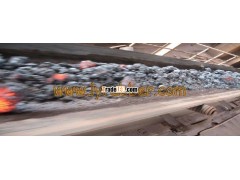
Hot transported material can very easily damage the conveyor belt. To prevent possible damages, we design and manufacture heat resistant conveyor belt; We adopt EP fabric with high modulus, low shrink, and high breaking tensile strength as core of the heat resistant conveyor belt. And use EPDM rubber or Chloro-butyl rubber with good heat-resistant performance as cover. And we also mix some other high-temperature resistant materials with the cover rubber, which makes the heat resistant conveyor belt with better performance in heat resistance. Under normal working temperature of below 180 degree, heat resistant conveyor belt is low in elongation, excellent in anti-abrasion.
Application areas of heat resistant conveyor belt: Cement plants, heating stations, power stations, garbage incineration plants, chemical industry, steelworks, metal foundries, metal processing industry
When choose heat resistant conveyor belt, there are two conditions for reference:
1. Because of the difference of the material and grain size, the surface of the conveyor belt is different. Bulk materials such as coke and iron ore have gaps, it causes the air convection, so the temperature on the belt surface is lower than that of the transported materials.
2. When conveying small size material or powder, such as cement, aluminum, carbon black, etc. The temperature of the material conveyed is mostly the same as that on the belt surface, in this case, when choose the belt type, we have to know not only the conveyed material temperature but also understand the actual heat state of the belt surface.
| Item | Conveyed Material Temperature | Belt Surface Temperature | Usage |
| T1 | Bulk material 70°C-200°C, powder 70°C-120°C | 50°C-120°C | Coke, sinter, and low- temperature heat resistant |
| T2 | 100°C-400°C | 120°C-200°C | Steel and casting, sinter |
| T3 | 100°C-400°C | 120°C-200°C | Cement clinker, residues, dry powder |
| HOR | 70°C-120°C | 50°C-120°C | Asphalt and other oil-bearing materials |
Heat Resistant Conveyor Belt
